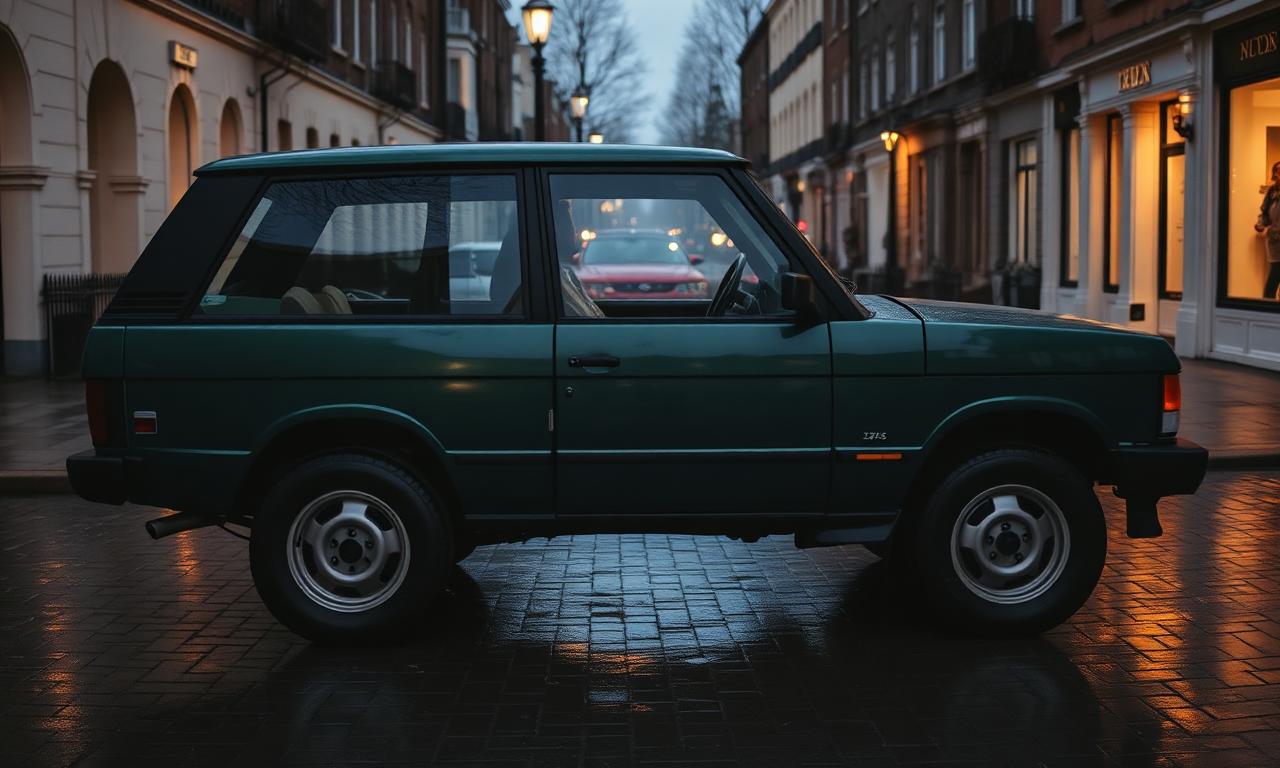
Model dossier · P38A

Range Rover P38A

1994 – 2002

The bridge generation. Air suspension arrives — and never leaves.

Range Rover Range Rover P38A (1994 – 2002)
Range Rover P38A · 1994 – 2002

Overview

P38A at a glance

Key facts

Body styles
SWB only
Units built
≈ 167,000
Collector picks
'01–'02 Vogue, Westminster, Holland & Holland
Values (2025)
$6k – $28k

Common symptoms

  • EAS air suspension faults

    Perished bags, valve block leaks, dead compressor. The #1 P38A ownership item.

  • BeCM lockout / battery drains

    Body Electrical Control Module quirks — never let the battery go flat.

  • Head gasket failure (V8)

    Cylinder liner slippage triggers HGF. Top-hat liner rebuild is the cure.

  • ABS pump 'three amigos'

    ABS, HDC, and traction lights on together — usually the ABS modulator or shuttle valve.

Resources

Issues, parts, and manuals currently focus on the L405. P38A-specific archives are being compiled — check back soon.

Issues

Common problems & troubleshooting

The failures owners of the P38A actually see, with the symptoms to look for and the steps to work through them. Reference only — complex repairs should go to a specialist.

01

EAS (Electronic Air Suspension) fault — car on bump stops

Symptoms
Dashboard warning, ride height stuck low or high, compressor runs long or not at all.
Likely causes
Perished air bags, valve-block O-ring leaks, worn compressor piston seal, or a failed height sensor.

Troubleshooting steps

  1. 1.Read EAS fault codes with a Nanocom, Faultmate, or GAP IID Tool.
  2. 2.Soap-test each bag and valve-block port to locate leaks.
  3. 3.Rebuild the compressor with a piston liner + seal kit (cheap and effective).
  4. 4.Replace all four bags together; recalibrate ride height after the fix.
02

BeCM lockout / heavy battery drain

Symptoms
Immobiliser will not clear, no crank, remote-fob won't sync, battery flat after a few days.
Likely causes
BeCM (Body Electrical Control Module) enters lockdown after a low-voltage event; failing alarm ECU or door-latch microswitches cause key-off drain.

Troubleshooting steps

  1. 1.NEVER jump-start with the key in — clear the battery terminal first.
  2. 2.Do an EKA (Emergency Key Access) sequence to unlock the BeCM.
  3. 3.Measure quiescent current — > 50 mA an hour after lock-up indicates a wake source.
  4. 4.Pull fuses one at a time to isolate the drain; replace door-latch microswitches if the alarm ECU keeps waking.
03

V8 head gasket failure (4.0 / 4.6)

Symptoms
Overheating, coolant loss, white exhaust smoke, misfire, oil/coolant emulsion.
Likely causes
The same liner-slip failure as the Classic — the block gives before the gasket does.

Troubleshooting steps

  1. 1.Confirm with a block-tester chemical test rather than assuming HGF.
  2. 2.Pull the heads; inspect liner heights with a straight edge and feeler gauge.
  3. 3.If any liner has moved, do a top-hat liner rebuild — not just a head-gasket swap.
  4. 4.Fit uprated head bolts and refresh the cooling system while it's apart.
04

"Three amigos" — ABS, HDC, and traction lights all on

Symptoms
All three warning lamps illuminate together, cruise disabled, HDC unavailable.
Likely causes
ABS shuttle valve stuck, brake-pressure sensor failure, or a corroded modulator connector.

Troubleshooting steps

  1. 1.Read ABS codes with a compatible scanner (generic OBD won't reach it).
  2. 2.Inspect and clean the modulator connector for green corrosion.
  3. 3.If the shuttle valve is stuck, tap it lightly to free it as a diagnostic — replacement is the real fix.
  4. 4.Replace the ABS modulator or brake-pressure sensor per the fault code.

Need a specialist?

Alfa Auto Care — Woodside, Queens NY

Land Rover diagnostics & repair for classic and modern Range Rovers.

Shop details →

History

The story

The second-generation Range Rover (project P38A) was the difficult middle child: more luxurious than the Classic, less capable off-road than its later siblings, and famously electrical. Values have finally begun to climb as clean examples become rare.

Launched in 1994 to replace the Classic, the P38A introduced electronic air suspension (EAS), a proper luxury interior, and BMW-sourced diesel power alongside the familiar Rover V8.

Reliability lore has followed it for decades — the BeCM electronic body control module, EAS, and head-gasket issues on the V8 gave the P38A a reputation for stranding owners at inopportune moments.

Today, a properly sorted P38A is one of the most rewarding classic Rovers to own: the last analog Range Rover with genuine off-road hardware and modern-enough comfort.

At a glance

Specifications

Production
1994 – 2002
Architecture
Body-on-frame, boxed steel chassis
Length
4,713 mm
Suspension
Four-corner electronic air (EAS)
Transfer case
Two-speed Borg-Warner
Wading depth
500 mm

Powertrains

Engine family

4.0 V8

1994 – 2002

190 hp

Rover-derived. Cylinder-liner slippage is the well-known failure — sleeved rebuilds are common.

4.6 V8

1995 – 2002

218 – 225 hp

Same block, same concerns. HGF and top-hat liners are the fix.

2.5 BMW M51 diesel

1994 – 2002

134 hp

Sturdy inline-six. Watch for timing chain rattle and lift-pump failure.

Timeline

Year by year

  1. 1994

    P38A launches. EAS air suspension debuts on the platform.

  2. 1999

    'Vogue 30th' anniversary edition; interior updates.

  3. 2001

    'Westminster' and 'Holland & Holland' editions run out the range.

  4. 2002

    Final year — replaced by the BMW-developed L322.