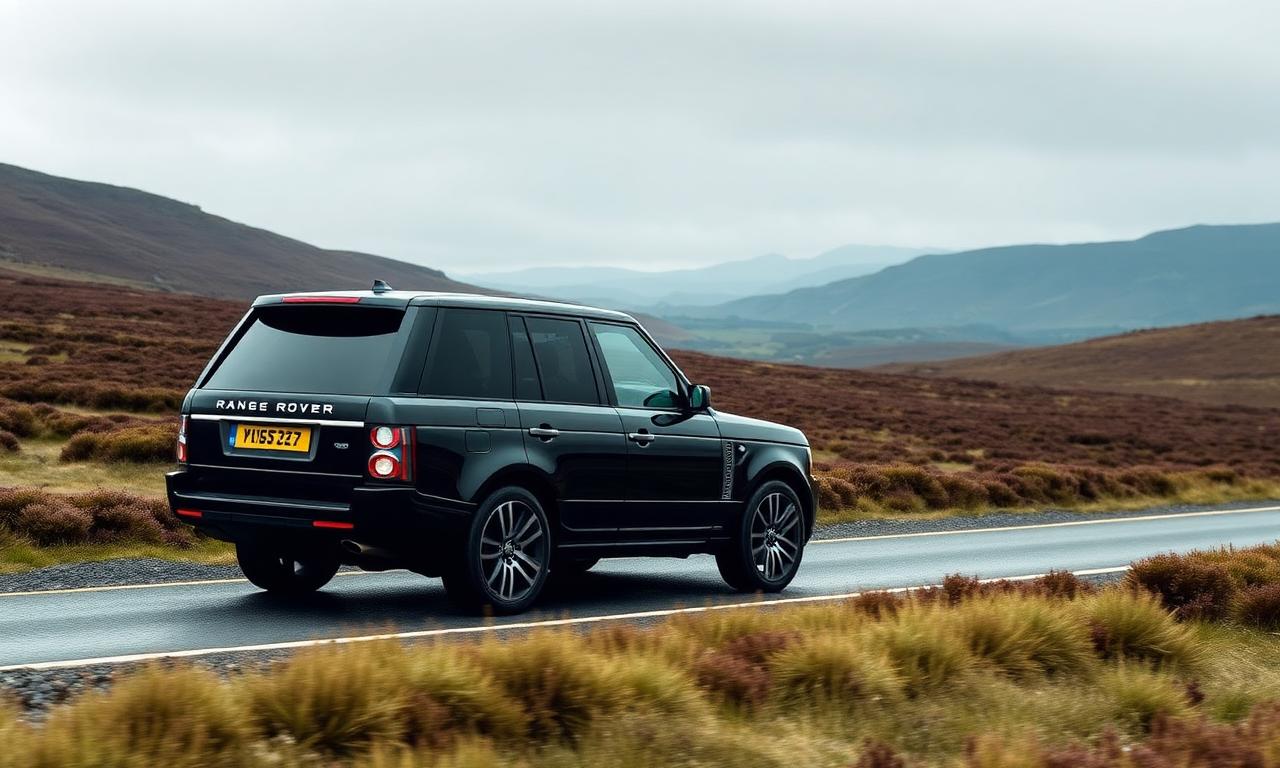
Model dossier · L322

Range Rover L322

2002 – 2012

The BMW-engineered Range Rover. A decade of quiet dominance.

Range Rover Range Rover L322 (2002 – 2012)
Range Rover L322 · 2002 – 2012

Overview

L322 at a glance

Key facts

Body styles
SWB only
Units built
≈ 280,000
Collector picks
2010–2012 refresh, 5.0 Supercharged Autobiography
Values (2025)
$12k – $55k

Common symptoms

  • Air suspension compressor

    Hitachi (early) or AMK (later) compressors wear out. Rebuild kits are cheap; dealer parts are not.

  • Timing chain guides (5.0)

    LR-V8 5.0 petrol/supercharged — plastic tensioner guides fail around 80–100k mi.

  • Coolant crossover pipe (5.0)

    Buried under the supercharger. Do it while you're in there.

  • Parking brake actuator

    Common failure on 2006–2012 cars. Replacement actuator is a known fix.

  • Front differential

    Whine or growl at speed. Often traced to pinion bearings.

Resources

Issues, parts, and manuals currently focus on the L405. L322-specific archives are being compiled — check back soon.

Issues

Common problems & troubleshooting

The failures owners of the L322 actually see, with the symptoms to look for and the steps to work through them. Reference only — complex repairs should go to a specialist.

01

Air-suspension compressor failure

Symptoms
Ride-height fault, compressor runs but pressure won't build, slow to rise from kneel.
Likely causes
Worn Hitachi (pre-2010) or AMK (post-2010) compressor piston seal, or a clogged intake filter.

Troubleshooting steps

  1. 1.Read suspension codes; check for "compressor overrun" or low-pressure faults.
  2. 2.Inspect and replace the compressor intake filter first — cheap and often the whole fix.
  3. 3.If pressure still won't build, fit a piston-seal + liner rebuild kit.
  4. 4.Replace the compressor relay while you're in there; they get cooked by long run-times.
02

Timing chain / tensioner wear on 5.0 LR-V8 (S/C)

Symptoms
Cold-start rattle for 2–5 seconds, rough idle, P0016/P0017/P0018 correlation codes.
Likely causes
Plastic tensioner guides degrade around 80–100k mi; primary + secondary chains stretch.

Troubleshooting steps

  1. 1.Confirm with live-data cam/crank correlation and a listen at cold start.
  2. 2.Do the full job: primary chains, secondary chains, guides, tensioners, and sprockets.
  3. 3.Replace the supercharger snout oil while the blower is off.
  4. 4.Use updated metal-backed tensioner guides to prevent recurrence.
03

Coolant crossover pipe leak (5.0 S/C)

Symptoms
Sweet coolant smell, slow coolant loss, drips down the back of the block.
Likely causes
Plastic crossover pipe buried under the supercharger becomes brittle with heat cycles.

Troubleshooting steps

  1. 1.Confirm by removing the intake to inspect the pipe visually — it's hidden.
  2. 2.Only economical to do while the supercharger is already off (e.g. during a timing chain job).
  3. 3.Fit the updated metal replacement pipe, not another plastic one.
  4. 4.Refresh all coolant hoses in the same area while access is open.
04

Parking brake actuator failure

Symptoms
"Park Brake Fault" message, motor whirring without engaging, brake stuck on or off.
Likely causes
Worn internal gears in the rear-mounted electric parking brake actuator (2006–2012).

Troubleshooting steps

  1. 1.Read chassis codes for the EPB module and note actuator fault.
  2. 2.Attempt a manual release via the emergency cable before towing.
  3. 3.Replace the actuator as an assembly — internal repair is not economical.
  4. 4.Recalibrate the EPB with a capable scan tool after fitting.

Need a specialist?

Alfa Auto Care — Woodside, Queens NY

Land Rover diagnostics & repair for classic and modern Range Rovers.

Shop details →

History

The story

Developed under BMW ownership and delivered under Ford's, the L322 was the most technically ambitious Range Rover to that point — monocoque construction, independent suspension, and a cabin that rewrote luxury SUV expectations.

Introduced in 2002 with BMW M62 V8 and M57 diesel power. Ford took over Land Rover in 2000 and inherited the finished car, running it through 2005.

The 2006 facelift brought Jaguar-derived AJ-V8 engines. 2010 delivered a substantial makeover — TDV8 diesel, LR-V8 supercharged petrol, and the modern-looking dashboard.

The 2010–2012 cars are the collector's pick: styling holds up, running gear is stronger than earlier cars, and prices remain reasonable — for now.

At a glance

Specifications

Production
2002 – 2012
Architecture
Steel monocoque body
Length
4,972 mm
Suspension
Independent w/ cross-linked air
Transfer case
Two-speed w/ Terrain Response (from 2006)
Wading depth
700 – 900 mm

Powertrains

Engine family

4.4 BMW M62 V8

2002 – 2005

286 hp

Sweet-running, but timing chain guides and Nikasil concerns on early US-market blocks.

3.0 BMW M57 diesel

2002 – 2006

175 hp

Robust inline-six. Swirl-flap failure is the classic gotcha.

4.4 Jaguar AJ-V8

2006 – 2009

305 hp

Facelift-era petrol. Timing chain tensioners are a service item, not a surprise.

4.2 Supercharged V8

2006 – 2009

395 hp

Eaton-blown Jaguar unit. Watch for crankshaft snout wear.

3.6 TDV8 diesel

2006 – 2010

268 hp

Big torque, big service bills. EGR cooler and turbo actuators are common jobs.

5.0 LR-V8 (S/C)

2010 – 2012

375 – 510 hp

Introduced with the 2010 refresh. Timing chain guides on 5.0 engines is the well-known issue.

4.4 TDV8 diesel

2010 – 2012

313 hp

Refined and torquey. Cooling system and rocker cover leaks are the watch items.

Timeline

Year by year

  1. 2002

    L322 launches with BMW V8 and diesel power.

  2. 2006

    Jaguar-derived AJ-V8 engines; Terrain Response added.

  3. 2010

    Major refresh — new dashboard, LR-V8 5.0 petrol, TDV8 4.4 diesel.

  4. 2012

    Final L322 model year; replaced by L405 in September.